
How Automated Logistics Booking Eliminates the 4-Hour Window That Delays Patient Treatment
At 2:15 PM, a cell therapy batch is released by Quality Assurance. At 2:45 PM, the logistics coordinator notices the email. At 3:00 PM, the courier portal is finally opened. The next available cryogenic shipment slot? Tomorrow morning. One therapy. One patient. Nearly 18 hours lost. Not because manufacturing slowed down. Not because QA delayed release. Not because the courier lacked capacity. The delay happened because the shipment booking missed the narrow window when transport capacity was available. This is one of the most overlooked operational challenges in cell and gene therapy (CGT). In traditional pharmaceutical logistics, a delayed shipment …

Why the Right Alert at the Right Moment Changes Everything in Cell Therapy Operations
In cell therapy, delays rarely begin with manufacturing. More often, they begin with communication. A missed notification. An email opened too late. A scheduling conflict discovered after the courier arrives. A QA hold sitting unnoticed during shift changes. The challenge is not whether organizations have notification systems. The challenge is whether the right person receives the right information at the right moment. And in FDA-regulated, GMP-driven environments, that distinction matters more than many organizations realize. The Hidden Operational Risk in Cell Therapy Cell and Gene Therapy (CGT) operations involve one of the most complex coordination models in healthcare. A single …
Why Cell Therapy Visibility Must Start at Patient Enrollment – Not Manufacturing
In many cell therapy programs, visibility is often viewed as a manufacturing responsibility. Where is the batch? Which step is currently active? Has quality review been completed? These are valid and necessary questions. Manufacturing visibility remains a foundational requirement for maintaining FDA compliance, supporting GMP environments, and aligning with validated Standard Operating Procedures (SOPs). But over time, many organizations have begun to notice something important: Manufacturing visibility alone does not provide the full picture. Cell therapy is fundamentally different from traditional pharmaceutical manufacturing. It is not batch-first manufacturing. It is patient-first manufacturing. And the patient journey begins long before the …
Supply Chain Integration with PragLife: Orchestrating Seamless Connectivity Across the Cell & Gene Therapy Ecosystem
In cell and gene therapy manufacturing, the difference between a life-saving treatment reaching a patient on time and a critical delay often comes down to one factor: supply chain integration. The complexity is staggering. A single CAR-T therapy journey involves coordinating patient enrollment, apheresis scheduling, cryopreservation, transportation across multiple time zones, GMP manufacturing, quality control, final product delivery, and patient infusion, all while maintaining perfect Chain of Identity (COI) and Chain of Custody (COC) at every touchpoint. Manual coordination across these stakeholders is not just inefficient. It’s a patient safety risk. The Integration Imperative in Personalized Therapies Cell and gene …
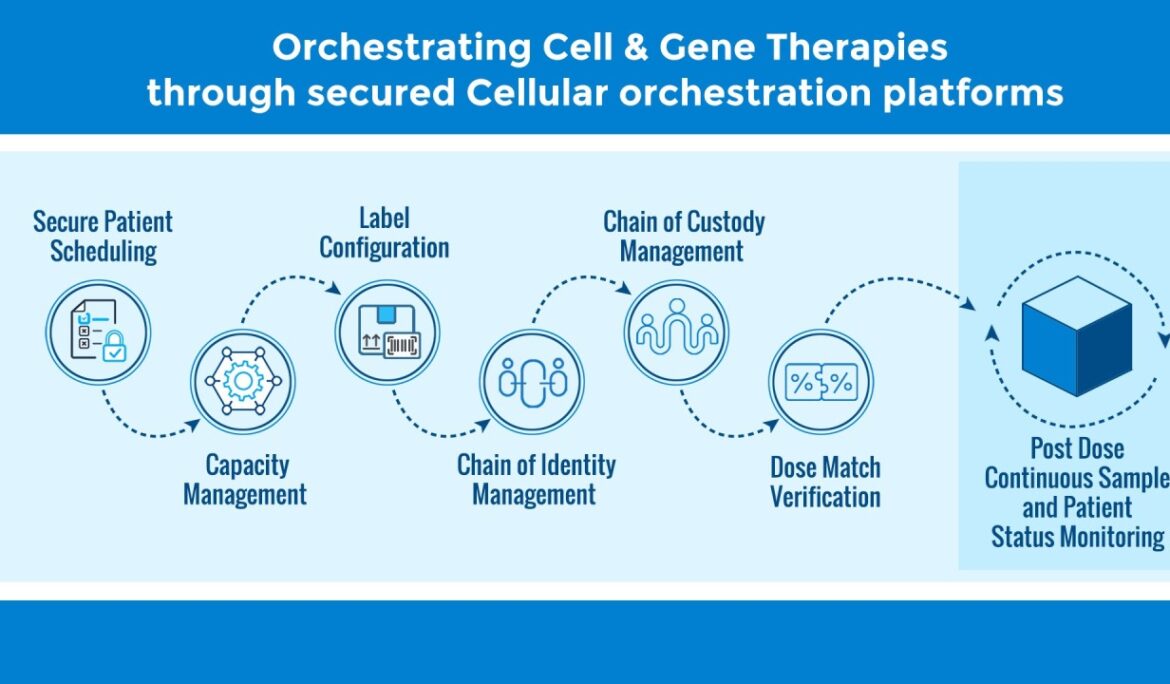
How Cellular Orchestration Platforms Handle the Diversity of Cell & Gene Therapies
The cell and gene therapy landscape in 2025 presents an unprecedented challenge: the pipeline contains over 4,000 candidates, half of them gene therapies – according to the American Society of Gene & Cell Therapy (ASGCT) and Citeline’s Q3 2024 report. Each therapy brings unique requirements for manufacturing, tracking, and delivery. From CAR-T cells requiring precise temperature control to allogeneic NK cells demanding different storage conditions, the diversity is staggering. Yet within this apparent chaos lies an opportunity for organizations that can master the complexity through intelligent software orchestration. The Scale of Diversity Challenges Modern Organizations Cell and gene therapies present …